-
Reprinted from the Anchorage Daily
News , Friday, March 5, 1999 , Jury punishes State
Farm, by Liz Ruskin, Daily News reporter
An Anchorage jury on Thursday awarded
$150 million to a former State Farm Insurance agent who
said he lost his agency because he insisted on telling
his customers the truth about life insurance.
"We're incredibly disappointed with the
jury's verdict," said attorney Michael Lessmeier, who
represented State Farm Insurance in the case.
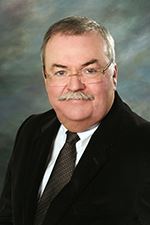
Bob Bellott, who operated a State Farm
agency in Anchorage for 21 years, claimed the company
pushed its agents to sell life insurance and annuities
to customers by making them sound like good investments.
"They wanted him to say 'This is a great
way to save for retirement, a great way to save for your
child's education,' and it's not," said Rick Friedman,
Bellott's attorney.
The company trained its agents to sell
certain life insurance policies by pointing out that the
policyholder's payments create a fund that grows and
that the person can borrow against or withdraw from it
while they are still alive, Friedman said, even though
the rate of return isn't very good compared with stocks,
bank certificates of deposit or other investments.
One training script taught agents to sell
such insurance to a fictitious 55-year-old widow by
getting her to believe it's for her retirement, he said.
To better answer his customers'
questions, Friedman said, Bellott got training in
financial planning and obtained a securities license in
1995. He sold other investments out of his agency but
wasn't violating his contract with State Farm because he
wasn't selling other types of insurance, his attorney
said. But he told company officials he didn't feel that
he could hand out brochures that misled people into
thinking life insurance was a great investment option,
according to Friedman.
State Farm has about 17,000 independent
agents. As part of the agency contract, the company
retains the right to control the marketing materials the
agents use to sell State Farm policies.
The company terminated his agency
agreement in August 1996.
The same Superior Court jury on Wednesday
awarded Bellott $2.7 million to compensate him for the
loss of his agency, then returned Thursday to decide the
punitive damages.
Friedman urged the jury to send a
message, not only to State Farm but to the rest of the
insurance industry, that such marketing ploys are wrong.
They'd have to come up with a big number to get the
attention of a company as large as State Farm, he said.
"What does $1 million mean to State Farm
when it's growing at the rate of $20 million a day?" he
asked in his argument for punitive damages.
It might be impossible to come up with a
figure that would actually punish State Farm, "but
hopefully, at least you can get the word out," he said.
Lessmeier asked the jury to use
discretion. The first verdict, in which the jury said
State Farm had wronged Bellott, was enough to get the
company's attention, he said.
"I can tell you that your ($2.7 million)
verdict has shaken me to the core," the State Farm
lawyer told them.
He read from company documents that told
agents they should only market life insurance policies
to people who have life insurance needs.
Outside the courtroom, Lessmeier said the
company had not tried to blur the line between
investments and insurance.
"We market our insurance products as
insurance products," he said.
The main theme of Bellott's case, that he
was fired for telling his customers the truth, emerged
late in the case as the trial neared, Lessmeier said. It
was not the real issue, he maintained. The problem, he
said, was that Bellott was running another investment
business out of his agency.
The Bellott case is not the first to
raise questions about State Farm's marketing tactics.
Last month, State Farm agreed to settle for $238 million
a class-action lawsuit brought by policyholders Outside.
That case, among other things, accused the company of
soliciting sales by referring to life insurances
policies as "investments" and "retirement plans." It
also said policyholders were duped into switching to
policies that lost value.
Thursday's $150 million award was the
biggest verdict ever for Friedman, who has won several
cases against insurance companies but has yet to collect
on any.
In 1996, Friedman won a $16.5 million
punitive damages award against Aetna Insurance Co. in a
federal trial in Juneau. His client was a state worker
who said she lost her home and had to live in her car
after she became disabled in an accident and the company
refused to pay benefits she was entitled to. The judge,
however, reversed the jury's punitive damages award, and
the case is still being fought. Last year, another of
Friedman's clients won an $8.4 million punitive damages
award against Aetna for refusing to pay long-term
disability benefits to a state worker disabled by
congestive heart disease. That case is on appeal.
Friedman also won a $9.6 million verdict
against State Farm in an Idaho case.
..................................
Commentary by
Bob Bellott
Hello Jack,
Its true. We went the distance all right.
The case ended today at about 4:00 p.m. Alaska Standard
Time in State District Court, Anchorage, Alaska. Verdict
in favor of Plaintiff (Robert J. Bellott Insurance
Agency, Inc.)
Compensatory damages were $2.7 million.
With interest and attorney's fees to be awarded, it will
total $3.7 million. In addition, punitive damages
awarded were $150 million. I know, it sounds incredible.
The award will be appealed for certain, but in the
meantime, interest of 15.5% annually means the clock is
ticking at the rate of $22 million per year. I think we
got their attention now. Perhaps all agents on the old
contract can sleep a little better.
A cautionary note: Agents should not get
cocky or sassy over this victory. Only an extraordinary
set of circumstances combined to allow this to happen,
not the least of which was my brilliant attorney,
Richard Friedman. Hats off to second chair Pete Ehrhardt
also.
Thanks again for the good wishes.
-
Bob Bellott
-
Robert J. Bellott, MBA, CFP